
Loading.
Please wait

Loading.
Please wait


| Specs | Item | E330 |
|---|---|---|
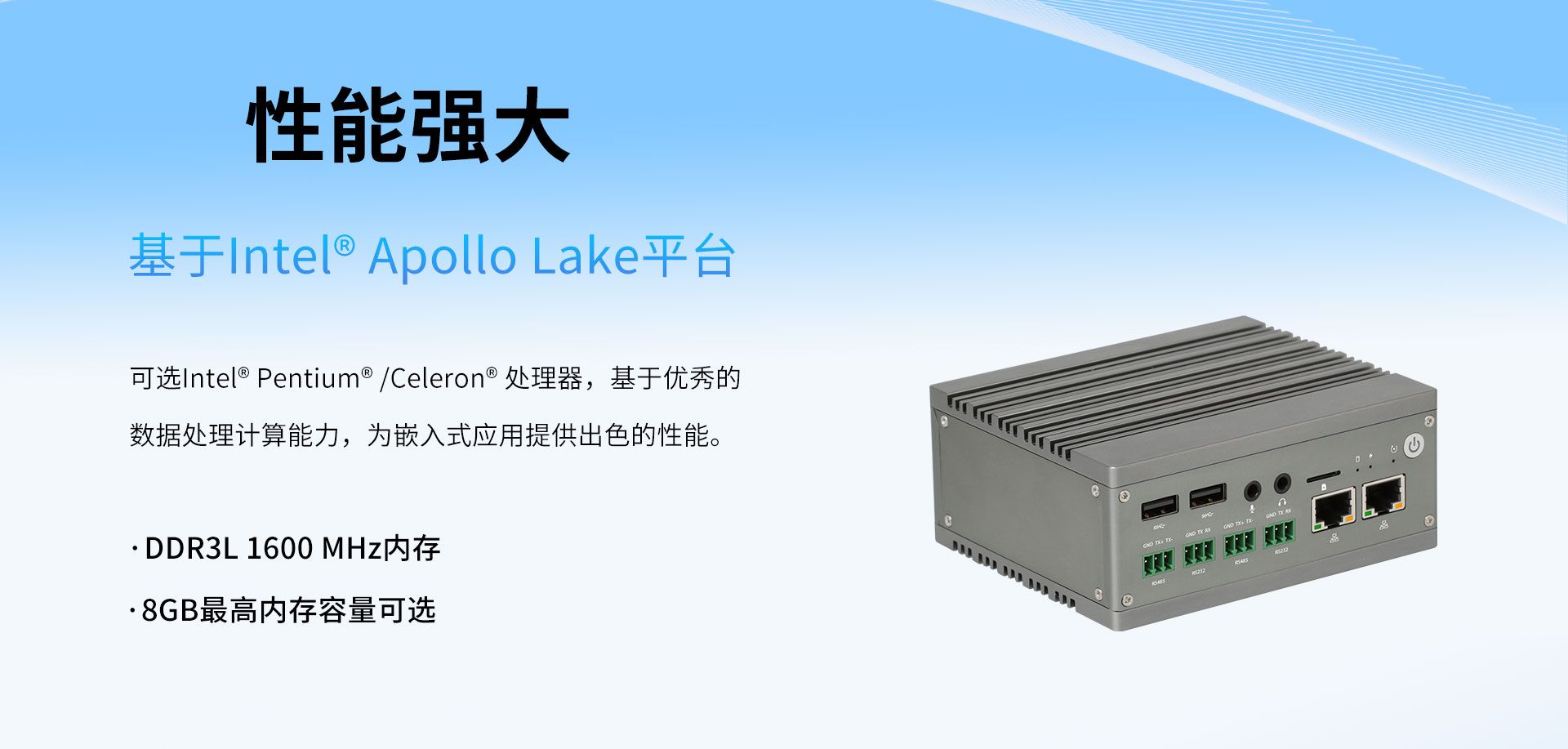
| Processor System | CPU | Intel® Apollo Lake N3350/J3355/N4200/J4205 Series Processors |
| BIOS | AMI 8MB UEFI | |
| Memory | Sockets | DDR3L 1600 MHz |
| Capacity | 2GB (Max. 8GB) | |
| Display | Chipset | Intel HD Graphics 500/505 |
| Graphics engine | 4K Codec Decode& Encode for H.264, MPEG2, MVC, VC-1, WMV9, H.265 / HEVC, VP9 | |
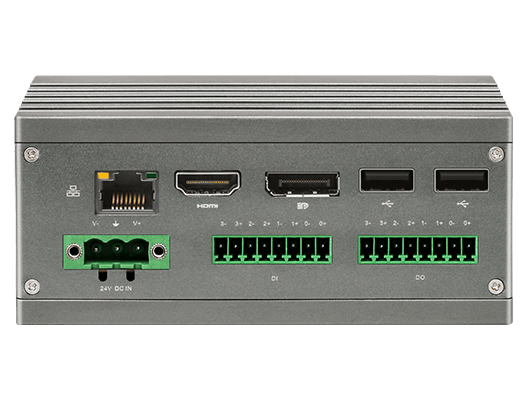
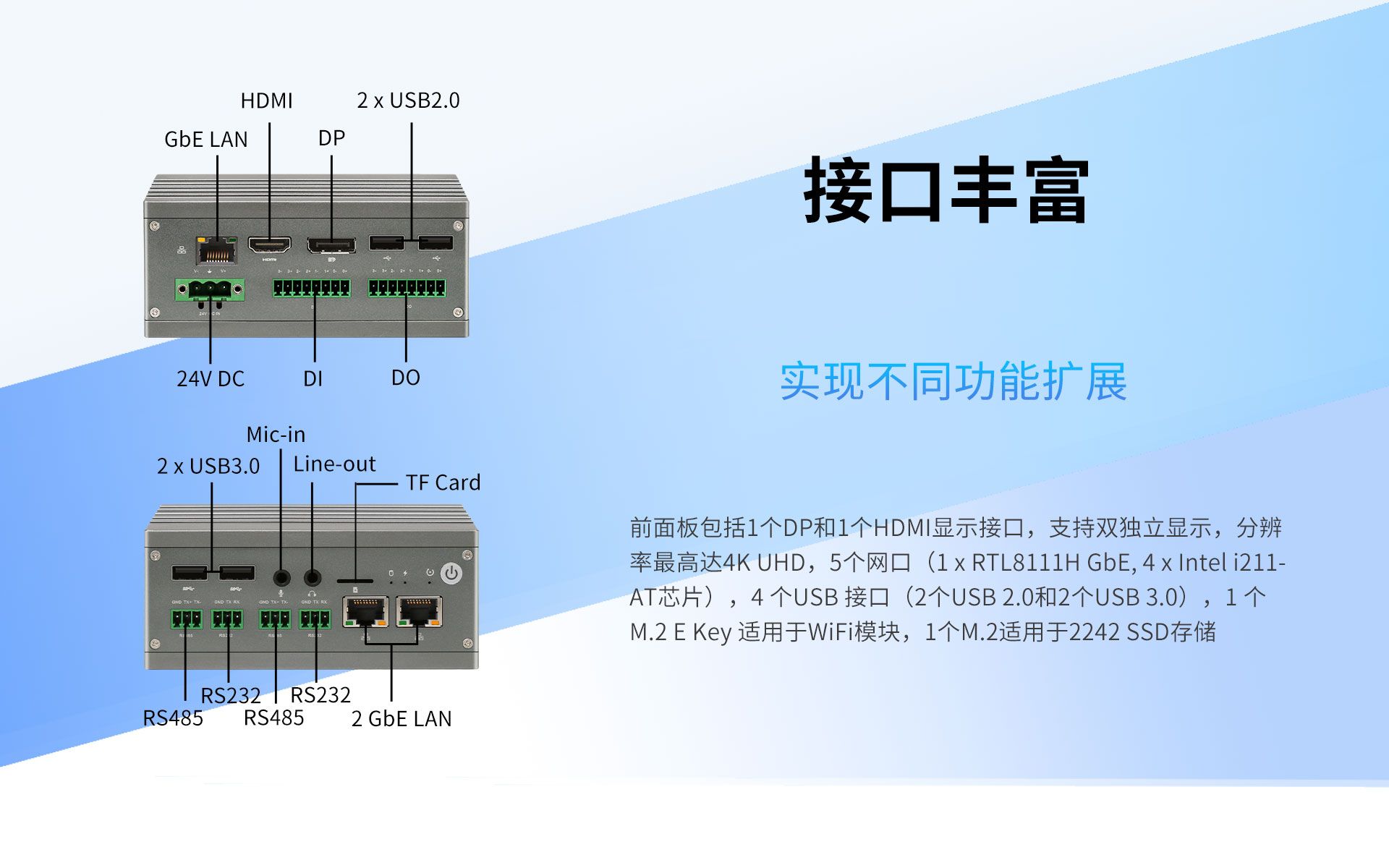
| DP | 1, Max. resolution 4096 x 2160@60Hz | |
| HDMI | 1, Max. resolution 3840 x 2160@60Hz | |
| Dual Display | HDMI+DP | |
| Audio | I/O | Realtek ALC662,High Definition Audio, Line Out & Line In |
| Ethernet | LAN | 1 x RTL8111H GbE, 2 x Intel i210AT GbE |
| I/O Interface | USB | 2 x USB2.0, 2 x USB3.0 |
| COM | 2 x RS232, 2 x RS485 | |
| DI | 4 x DI(Opto-couplers isolation) | |
| DO | 4 x DO(Opto-couplers isolation) | |
| Storage | M.2 | 1 x 2242 SSD |
| eMMC | MAX. 256GB | |
| TF Card | 1 | |
| SATA 3.0 | 1 x SATA 3.0, support 2.5" SSD | |
| Power Supply | DC input | 24V DC IN |
| OS | MicrosoftWindows | Windows 10 64Bit |
| Linux | Yes | |
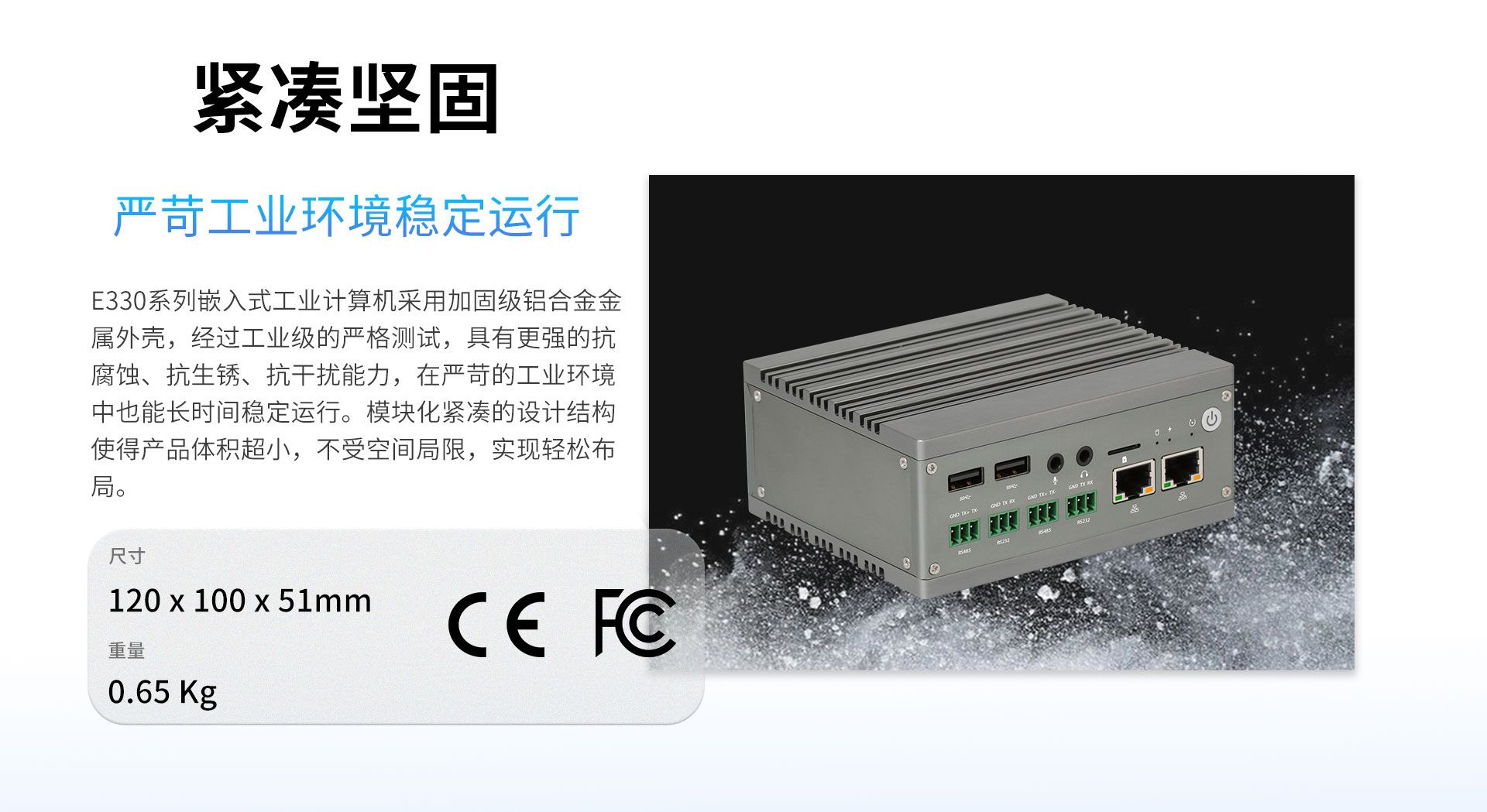
| Physical Characteristics | Construction | Aluminium Alloy |
| Mounting | Wall Mounting | |
| Dimensions | 120x100x51 mm(LxWxH) | |
| Weight | 0.65 Kg | |
| Environment | Operating Temperature | -20°C~60°C, Airflow 0.7m / s |
| Storage Temperature | -40°C~80°C | |
| Relative Humidity | 95%@40°C(Non-Condensing) | |
| Vibration During Operation | With SSD:3Grms, IEC 60068-2-64, random vibration, 5~500 Hz, 1hr/axis | |
| Shock During Operation | With SSD:30 G, IEC 60068-2-27, half sine, 11m duration | |
| ESD | Contact +/-4 KV, Air +/-8 KV | |
| EMC | CE/FCCClassB |

Optimized solutions for high-reliability industrial automation and control systems.

Powerful computing performance to support AI-driven quality inspection and recognition.

Low-latency processing at the edge for IoT data aggregation and real-time analysis.