Logo
Products
Applications
Guides
About
Support
PhoneContact Us
Products
  • NUC/Nano Motherboard
  • 3.5-inch Motherboard
  • All-in-one IPC
  • Scalable Embedded Series
  • Mini Size series
  • Expansion cards and Ethernet cards
Solutions
  • Smart Manufacturing
  • Edge AI
  • Intelligent Retail
Support
  • Tech Support
  • Download Center
  • Contact Us
Shenzhen Yantronic Technology Co.

Yantronic Technology

Innovation in Industrial Computing

  • Sales+86 137 2428 6683
  • Emailxs@yxipc.com
  • WhatsApp+86 137 2428 6683
WeChat QR

Scan to contact Sales

WeChat · Yantronic2018WhatsAppFacebook

Copyright © 2018-2026 Shenzhen Yantronic Technology Co., Ltd. All Rights Reserved.

粤ICP备2025497732号
Privacy PolicyTerms of Service
What Is an Industrial PC (IPC)?

INDUSTRIAL COMPUTING GUIDE

What Is an Industrial PC (IPC)?

Everything you need to know about Industrial PCs — from definition and types to key specifications and selection criteria for your industrial automation project.

"

Quick Answer

An Industrial PC (IPC) is a ruggedized computer designed for continuous 24/7 operation in harsh environments.

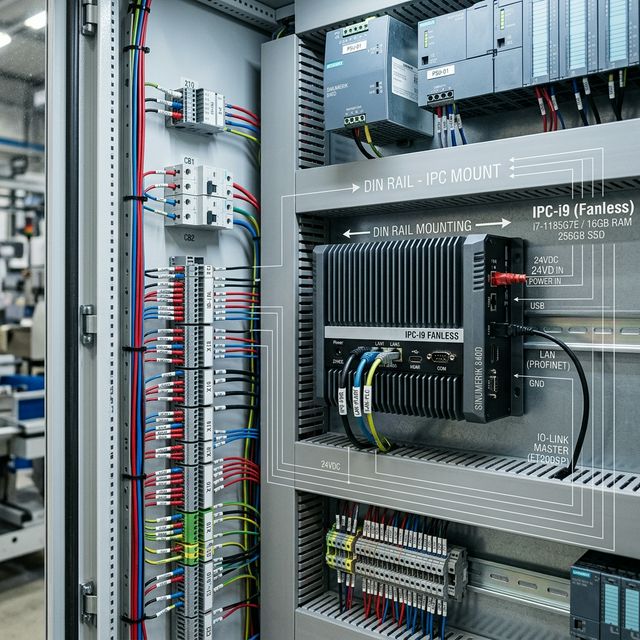
Unlike consumer PCs, IPCs use industrial-grade components rated for wide temperature ranges (typically -20°C to 60°C), feature sealed dustproof and vibration-resistant enclosures, and provide specialized I/O interfaces (RS232, RS485, CAN Bus, GPIO). Their product lifecycles typically span 5–7 years, ensuring long-term availability for industrial projects. Major IPC types include fanless box PCs, panel PCs, rack-mount systems, single board computers (SBCs), and edge computing gateways.

Types of Industrial PCs

TypeForm FactorBest ForKey Feature
Box PC / Embedded PCCompact, fanlessEdge deployment, factory floorZero maintenance, dustproof
Panel PC10.1" – 21.5" touchscreenHMI, SCADA, MES terminalsIP65 front, integrated display
Rack-mount PC19" 1U/2U/4UControl rooms, server racksHigh expandability, redundant power
Single Board Computer3.5", EPIC, COM ExpressCustom integration, OEM projectsFlexible, compact, cost-effective
Edge GatewayDIN-rail or compact boxIoT, AI inference, data aggregationLow latency, protocol conversion

Key Specifications to Evaluate

01 CPU Performance

Intel Core i3/i5/i7 for heavy performance tasks like machine vision; Celeron/Atom for power-efficient embedded edge nodes; ARM RK3568/RK3588 for Linux-based IoT solutions.

02 Temp Range

-20°C to 60°C (standard); -40°C to 70°C (extended). Determines the harshest deployment environment your PC can survive.

03 Interfaces

RS232, RS485, CAN Bus for legacy industrial protocols; GPIO/DIO for sensor integration; GbE LAN for networking.

04 Expansion & Power

Expansion Slots

PCIe, M.2 NVMe/SATA, mPCIe for Wi-Fi/4G/5G module, additional I/O cards.

Power Range

DC 9–36V wide-range input for unstable power environments; some support PoE.

Frequently Asked Questions

Expert answers to common fundamental questions.

What is an Industrial PC (IPC)?
An Industrial PC (IPC) is a ruggedized computing platform purpose-built for continuous 24/7 operation in harsh industrial environments. Unlike consumer PCs, IPCs use industrial-grade components rated for wide temperature ranges (-20°C to 60°C), resist dust and vibration (IP65 rated), and provide extended product lifecycles of 5–7+ years. They are commonly deployed in factory automation, machine vision, edge computing, and process control.
How is an Industrial PC different from a regular desktop computer?
Industrial PCs differ from consumer desktops in five key areas: (1) Operating temperature: IPCs handle -20°C to 60°C vs desktop's 0–35°C; (2) Durability: IPCs withstand 5G vibration and 50G shock; (3) I/O interfaces: IPCs provide RS232, RS485, CAN Bus, GPIO vs desktop's USB-only; (4) Lifespan: IPCs offer 5–7 year supply guarantees vs desktop's 1–2 year product cycles; (5) Cooling: many IPCs use fanless passive cooling, eliminating moving parts.
What are the main types of Industrial PCs?
The main IPC categories are: (1) Box PCs / Embedded PCs — compact, fanless units for edge deployment; (2) Panel PCs — integrated touchscreen displays for HMI/SCADA; (3) Rack-mount PCs — standard 19-inch servers for control rooms; (4) Single Board Computers (SBCs) — 3.5-inch or EPIC form factor boards for custom integration; (5) Edge Computing Gateways — optimized for IoT data processing and AI inference at the network edge.
What specs should I evaluate when choosing an Industrial PC?
Key specifications to evaluate: (1) CPU performance — Intel Core i3/i5/i7 or Celeron/Atom for power-efficiency; (2) Operating temperature range — standard (-20°C to 60°C) or extended (-40°C to 70°C); (3) I/O ports — number and type of serial ports (RS232/RS485), LAN ports, USB, GPIO; (4) Expansion — PCIe, M.2, mPCIe slots; (5) Storage — industrial SSD with wide-temp rating; (6) Power input — DC 9–36V wide-range for unstable power environments; (7) Certifications — CE, FCC, UL, IEC 61850 for specific industries.
When should I choose a fanless Industrial PC?
Choose a fanless IPC when your deployment environment has: (1) Heavy dust, oil mist, or particulates — fans draw contaminants into the system; (2) Noise-sensitive areas — medical, broadcast, retail; (3) Vibration — fans are the first mechanical component to fail; (4) Limited maintenance access — remote sites, embedded in machinery. Fanless IPCs use aluminum-alloy heatsink enclosures for passive cooling, achieving MTBF of 50,000+ hours.

Continue Learning

IPC vs Commercial PC →

Full comparison of industrial and consumer computers

Fanless IPC Guide →

When and why to choose fanless cooling

Browse Products →

Explore Yantronic's full IPC product catalog